27/05/2026
The Ultimate Guide to 3D Printing Materials: FDM and Resins Explained
A Comprehensive Guide to Choosing Your 3D Printing Material (PLA, PETG, TPU, Figurine Resin, Tough 2000). Compare FDM and SLA/LCD Technologies. In brief: This article reviews the filament deposition polymers and liquid resins in our catalog. Discover their advantages, disadvantages, and ideal applications to succeed in all your additive manufacturing projects.
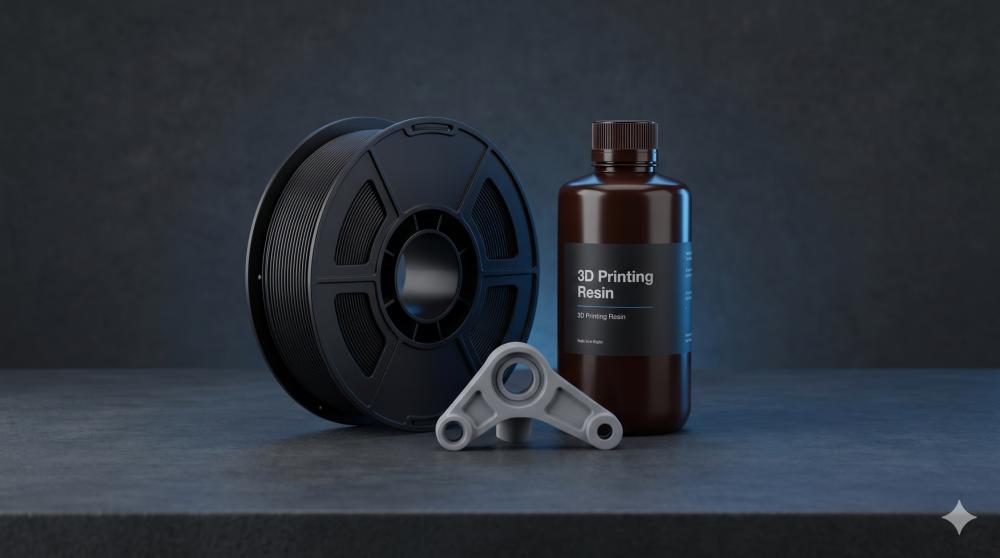
3D Printing: Don't Confuse FDM and Resin Anymore
Before choosing a material, you need to understand the technology:
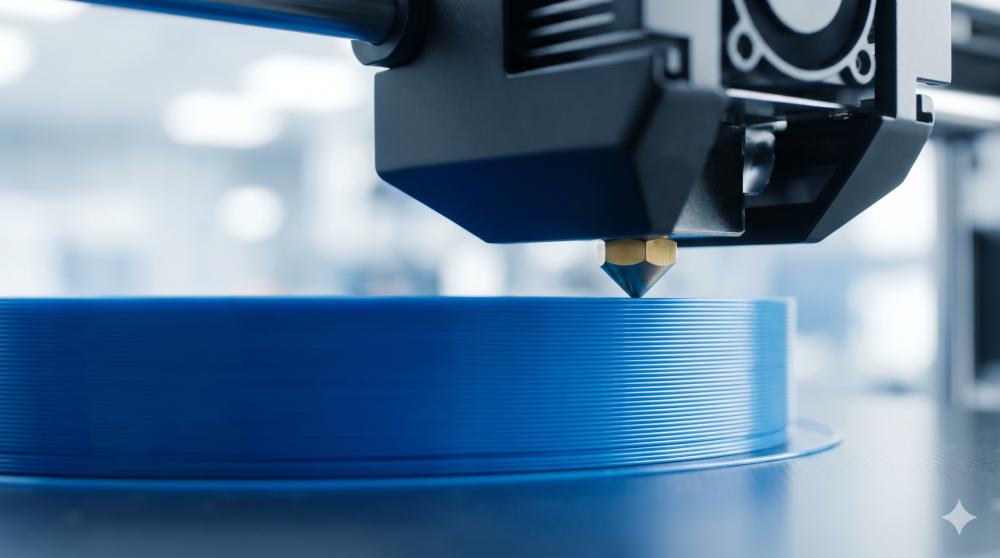
- FDM (PLA, PETG, TPU): Extrudes a melted plastic filament layer by layer. This is the go-to method for functional parts and rapid prototyping.
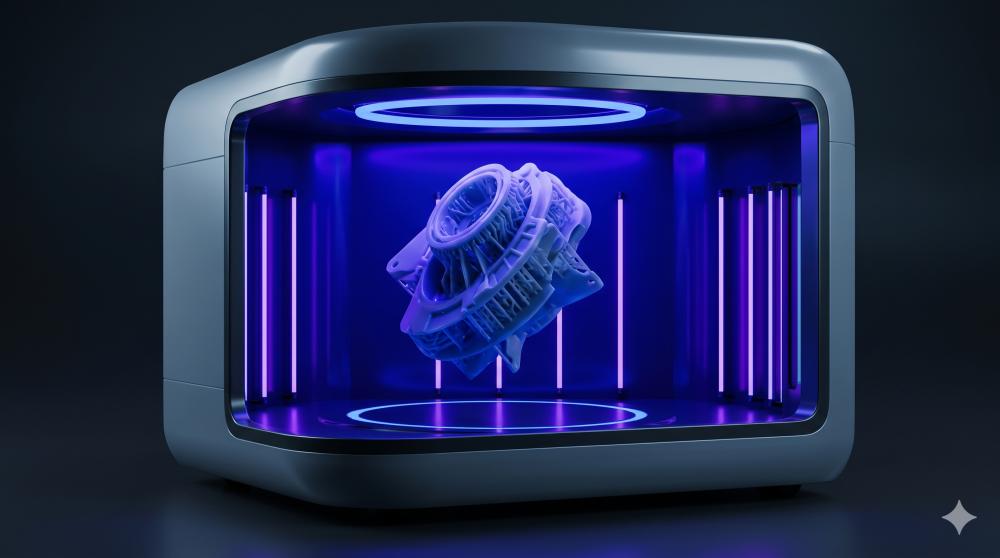
- Resin: A UV screen cures a liquid resin. This technology offers stunning detail and a perfectly smooth surface.
Technical Note: Unlike FDM, which can suffer from mechanical anisotropy (structural weakness between layer planes), resin printing produces isotropic parts: their strength is uniform in all directions.
FDM Filaments: Versatility for Function
1. PLA: The Essential Standard
PLA (Polylactic Acid) is the most widely used material in 3D printing. Easy to print and bio-based, it offers excellent visual results.
- Advantages: Very rigid, excellent surface quality, no deformation upon cooling (warping).
- Disadvantages: Brittle (low impact resistance) and heat-sensitive (deforms at 60°C).
- Ideal for: Visual prototypes, architectural models, or jigs without mechanical stress.
2. PETG: The Perfect Compromise
PETG combines the ease of use of PLA with the mechanical and thermal resistance of more industrial plastics.
- Advantages: High impact resistance, resistant to water and chemicals, withstands heat up to 80°C.
- Disadvantages: Prone to "stringing" (fine strands of material), a slight surface defect that can be reduced during the 3D printing post-processing phase.
- Ideal for: Mechanical parts, electronic enclosures, or parts subjected to outdoor use.
3. TPU: The Flexibility Expert
TPU (Thermoplastic Polyurethane) is an elastomer that behaves like rubber.
- Advantages: Extremely flexible, indestructible to impacts, excellent abrasion resistance.
- Disadvantages: Slow printing speed and strict design tolerances.
- Ideal for: Seals, robotics, shock absorbers, or protective cases.
Resins: Ultra-Precision at Your Fingertips
4. "Figurine" Resin (Standard)
This resin is formulated to capture every detail of your 3D file, even at a microscopic scale.
- Advantages: Surgical precision (0.05 mm layers), smooth surface ready for painting.
- Disadvantages: Relatively fragile in case of impact.
- Ideal for: Board game miniatures, jewelry models, and digital art.
5. Tough 2000 Resin (ABS-Like)
Need resin precision with FDM strength? "Tough 2000" resin simulates the mechanical properties of industrial ABS.
- Advantages: Very high mechanical strength, can withstand deformation before reaching the breaking point.
- Disadvantages: Requires strict adherence to the hollow design rules presented in our 3D printing design guide.
- Ideal for: Engineering, precise mechanical assemblies, and snap-fit parts.